

A Class A CDL refresher course zeroes in on reviving your driving instincts and making sure you’re 100% up to date with federal and state regulations. It’s like tuning a high-performance engine before tackling a cross-country haul—everything needs to hum in perfect harmony.
Understanding Class A CDL Refresher Courses
Imagine an elite athlete coming back from a break: reflexes need waking up and form needs sharpening. The same goes for drivers who haven’t been behind the wheel in a while. Small skill fades—like backing accuracy—can creep in almost unnoticed.
- Pre-Trip Inspections hone your ability to spot mechanical or safety issues before hitting the road.
- Regulatory Updates walk you through the latest hours-of-service and ELD requirements.
- Driving Drills reinforce smooth shifting, precise braking, and confident backing.
This training also charts the shifting terrain of trucking regulations, so you stay both capable and compliant.
Across the United States, roughly 1.8 million heavy and tractor-trailer drivers navigate our highways, and analysts predict about 90,000 new trucking jobs by 2024.
Consistent practice cements key skills into your routine and keeps rules top of mind for every haul.
Here is a screenshot showing key elements of a commercial driver's license overview.
This image highlights license classes, learner permits, and the testing criteria you’ll face as a Class A applicant.
Key Benefits Of Refresher Training
- Boosts your confidence by reinforcing safe driving habits.
- Ensures you’re aligned with updated federal and state rules.
- Reduces incident risk through repeated, supervised practice.
For state-specific permit details, check out our guide on CDL Requirements.
You’ll find options for in-person workshops, full-motion simulators, or blended formats. Simulators, for example, let you master tricky maneuvers without real-world risks, while small group settings spark peer learning.
How Refresher Courses Elevate Confidence
Think of each behind-the-wheel session like a musician drilling scales: repetition refines technique.
- Targeted drills address common slip-ups head-on.
- Real-time instructor feedback zeroes in on areas to polish.
- Routine check-rides build the calm and focus you need on exam day.
The payoff is less test anxiety and stronger performance out on the highway.
Next Steps For Enrolling
Contact Patriot CDL to explore refresher options and schedule your evaluation.
Preparation tips:
- Review any recent violations or tickets.
- Verify your DOT medical certification is current.
- Run through a full pre-trip inspection on your own.
Pro tips:
- Slot training around lighter driving weeks.
- Pack gloves, a logbook, and a few energy-boosting snacks.
- Arrive well-rested, refresh permit rules, and bring a positive mindset.
Choosing The Right Refresher Course Format
Picking a Class A CDL refresher course format is like settling into the cockpit that fits you best. You want the controls—pre-trip inspections, backing drills, air-brake theory, manual shifting, endorsement refreshers—to align perfectly with your style. Each module acts as a checklist, making sure you’re ready to roll.
Different delivery methods address varied learning preferences. Some drivers thrive in a small-group setting, bouncing ideas off peers. Others prefer one-on-one attention. And if you want a safe space to practice high-stakes maneuvers, a simulator blend might be your ideal match.
Common Refresher Modules
-
Pre-Trip Inspections
A step-by-step walkaround to spot issues before you leave the yard. -
Backing Drills
Repetition builds muscle memory for tight-space maneuvers. -
Air-Brake Theory
Reinforces pressure checks and emergency procedures. -
Manual Shifting
Fine-tunes gear transitions when you’re loaded up. -
Endorsement Refreshers
Updates you on hazmat, tanker, and other specialized rules.
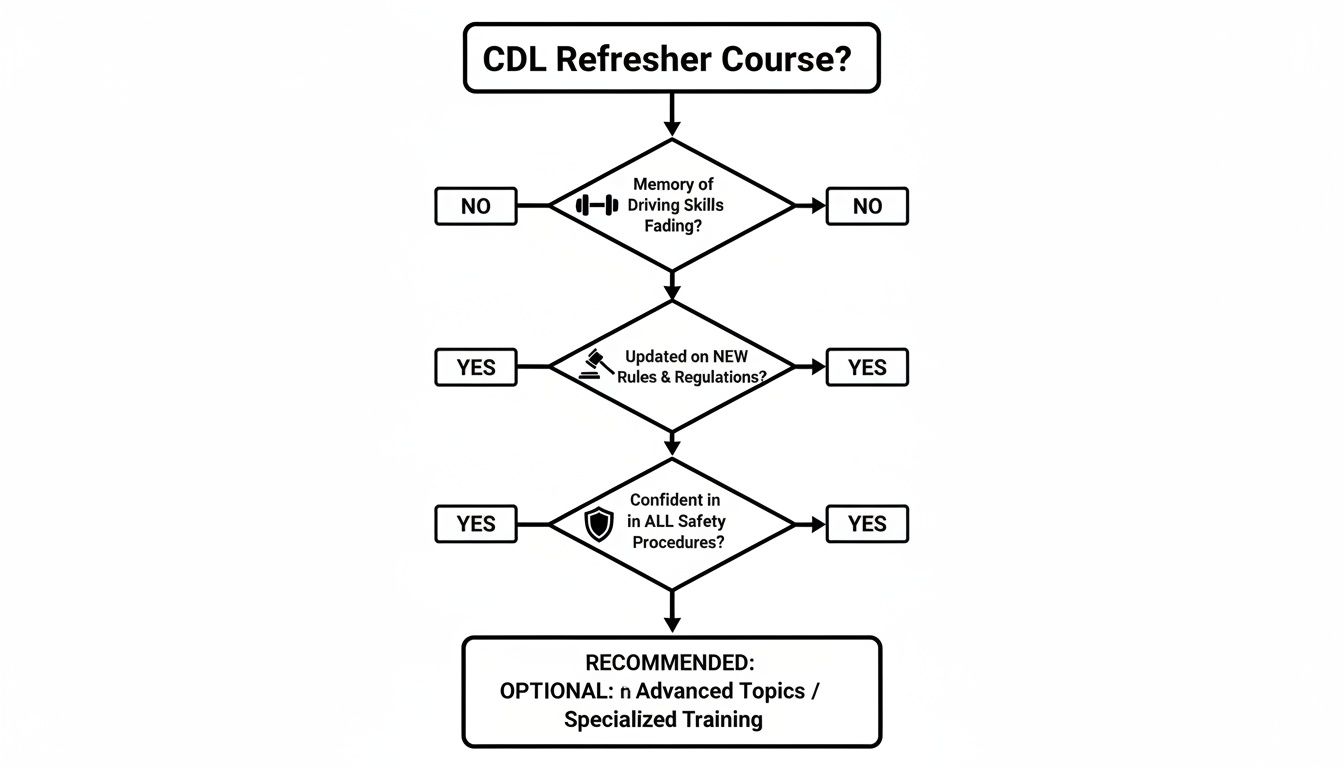
Format Decision Tree
When deciding, ask yourself: Am I targeting memory recall, regulatory updates, or safety drills? Use this simple guide to steer you toward the right style.
Comparing Delivery Formats
| Format | Ideal Candidate Profile | Duration Range | Key Focus Areas |
|---|---|---|---|
| Small Group Sessions | Collaborative learners | 8–40 hours | Standard drills, real-time feedback |
| One-on-One Coaching | Precision skill builders | 8–192 hours | Personalized critique, targeted fixes |
| Simulator Blend | Risk-averse practitioners | 40–120 hours | High-risk scenarios, theory review |
Tips For Choosing Your Format
- Identify Your Weak Spots: Review your recent driving logs to pinpoint areas that need attention.
- Align Time With Goals: Short programs sharpen one skill; longer ones dive deep.
- Decide On Group Size: Peer learning or private coaching—pick the one you respond to best.
- Check Schedule Flexibility: Make sure sessions fit around your hauling cycles.
Choosing a format that matches your style boosts learning retention and on-road confidence.
Scheduling And Cost Factors
Your time off the road and budgetary limits will guide your choice.
- Quick Tune-Ups (8–40 hours): Minor gaps, averaging $500–$1,200.
- Full Overhauls (120–192 hours): Comprehensive training, around $2,000–$5,000.
- Blended Simulator Packages: Mid-point balance, typically $1,000–$3,000.
You’ll find options from weekday intensives to weekend blocks, so you can slot training around busy seasons.
Sample Learner Profiles
- Maria, a veteran hauler, needed sharper trailer control. She opted for 16 hours of one-on-one drills focused on backing.
- Jamal returned after a year off the road. He chose an 80-hour simulator blend to refresh regulations and varied driving scenarios.
These examples show how your background and objectives drive the right format choice.
Ready to match your needs to a program? Explore our detailed program offerings to find schedules and pricing that work for you.
Estimating Course Duration And Cost
Time and budget usually steer your choice of a Class A CDL refresher course. Knowing upfront how long each option takes—and what you’ll pay—keeps surprises at bay.
Short programs feel like spark-plug changes: they polish key skills in a snap. Longer courses resemble complete engine rebuilds, restoring confidence and depth of knowledge.
Most schools break their offerings into three tiers:
- Quick Tune-Ups: 40–80 hours of focused practice
- Full Overhauls: 120–192 hours for a deep dive
- Simulator Blends: 60–120 hours mixing real-truck time with virtual drills
That range of hours drives cost, scheduling, and training depth. If you’re tied up with hauls, a 40–80-hour slot might slide between trips. But when you can clear your calendar for a couple of weeks, the longer plan gives room for every skill set.
Regional Pricing
Costs shift based on local wages and facility overhead. Here’s a quick snapshot:
| Region | Cost Range |
|---|---|
| Northeast | $1,200–$2,500 |
| Central | $800–$1,800 |
| South | $700–$1,600 |
| West Coast | $1,000–$2,200 |
Some schools toss in lodging or meal packages to ease the travel burden. Those extras can add $200–$600 but often save more in daily expenses.
- Shared housing: $50–$150 per week
- Meal plans (breakfast & lunch): $100–$300
- Shuttle service: stress-free rides to the training yard
Financing And Reimbursement Tips
Breaking tuition into bite-size payments makes budgeting smoother. Many schools offer multi-week payment plans, and some vocational lenders provide low-interest loans.
Don’t overlook employer support. A safety record boost or course completion can unlock partial or full reimbursement. Pull together a group of drivers to negotiate 10–20% off per-seat fees—bulk bookings often earn corporate-level discounts.
Smart investment in a refresher course pays back quickly through better job prospects and safer driving.
Sample Timeline And Budget
Mapping out a clear schedule slashes confusion and fatigue. Here’s one way to structure a four-week block:
- Week 1: 2–3 hours of classroom theory daily, then hands-on drills
- Week 2: 4–6 hours behind the wheel each day, plus daily review
- Week 3: 2–4 hours focusing on endorsements and tricky maneuvers
- Week 4 (Optional): Simulator practice or extra time on challenging skills
With this framework, you can tally total hours, estimate lodging costs, and factor in meals or transport. It turns a daunting calendar into a straightforward plan.
Cost Saving Strategies
Coordinating travel with fellow trainees can drop lodging bills through shared rates. Ask about early-bird or off-peak enrollment to shave 5–10% off your tuition. Also, check for veteran or union discounts—every dollar counts when you’re planning downtime and dollars.
Preparing For Your Class A CDL Refresher Course

Getting your paperwork and mindset in place marks the first stride toward a confident Class A CDL refresher. Start by gathering your valid driver’s license, DOT medical card, and any state-specific permits. A simple folder or even a scanned digital copy can speed check-in and keep stress at bay on day one.
Pre-Course Checklist
- Valid Class A CDL license and learner permit if required
- Current DOT medical certificate and vision report
- Logbook or electronic logging device credentials
- Notebook with hours-of-service rules summaries
- Comfortable work clothes and safety gloves
- Water bottle and light, non-greasy snacks
Review each item before you pack. For example, double-check your medical certificate’s expiration date to avoid any last-minute surprises.
Reviewing Regulations And Rules
The rules around hours-of-service and electronic logging devices shift often. Set aside one evening to skim the latest manual or watch a quick tutorial.
Staying on top of ELD requirements cuts down on compliance headaches and roadside stops.
This prep ensures you spend hands-on time driving instead of catching up.
Physical Conditioning Drills
Long days behind the wheel can tax your body if you’re not prepared. Think of your spine like a suspension system—it needs both strength and flexibility for a smoother ride.
- Neck rotations and shoulder stretches before morning drills
- Wrist and ankle mobility exercises to ease controls
- Light cardio, like walking or cycling, to sharpen focus
Consistency in these simple moves reduces fatigue during intensive sessions.
Sample Weekly Schedule
Mapping out your week in advance helps you balance classroom sessions and hands-on drills.
| Day | Morning | Afternoon | Evening |
|---|---|---|---|
| Monday | Paperwork review | Introduction to classroom | ELD rules recap |
| Tuesday | Physical drills | Pre-trip inspection theory | Solo manual shifting practice |
| Wednesday | Backing drills | Air-brake walkthrough | Group discussion on violations |
| Thursday | Endorsement Q&A | Simulated road scenarios | Hours-of-service workshop |
| Friday | Full pre-trip walkthrough | Mock road test | Rest and reflection |
Mental Preparation Tips
Quality sleep and balanced meals fuel both learning and safety behind the wheel. Aim for 7–9 hours of rest nightly during your training week.
Visualization techniques—like picturing a flawless walk-around inspection—can calm pre-drive jitters. For deeper insights, explore our guide on pre-trip inspection training.
Arriving organized and well-rested sets the stage for absorbing new skills quickly.
Equipment To Pack
Having the right gear can keep your focus sharp and reduce interruptions.
- Noise-reducing earplugs to minimize distractions
- Reflective vest for yard visibility
- Reliable flashlight for low-light inspections
- Spare pen and pocket notepad
- Backup phone charger or power bank
Tucking these items into your bag means you’re ready whether it’s daylight inspections or late-afternoon yard work.
Goal Setting For Week One
- Master a flawless pre-trip inspection by Wednesday
- Achieve consistent backing accuracy within 12 hours
- Commit to daily review of hours-of-service updates
Tracking progress against these targets helps you spot when you need to pivot.
Reviewing your goals daily cements achievements and highlights areas for improvement.
Day One Orientation
Arrive early to meet instructors and tour the yard. Orientation typically covers safety protocols, training schedules, and simulator demos.
- Meet your instructor and review training objectives
- Tour facilities and inspect yard routes
- Complete safety briefing and equipment overview
- Set up electronic log and classroom accounts
This initial session lays the groundwork for a structured, efficient week.
Final Reminders
Before you head out, charge every device and test notifications. Label your gear and give your schedule one last glance.
Prepared drivers learn faster and face fewer surprises.
Once orientation ends, you’ll be ready to dive into hands-on drills and practical assessments with confidence.
Measuring Course Outcomes And Job Readiness
When you wrap up a Class A CDL refresher, proof of progress matters. You want clear gains in inspection accuracy, backing precision, and brake checks that you can show to employers.
For instance, many students jump from an average 70% pre-trip inspection score to 90% or higher after targeted drills. That extra confidence means spotting hazards faster and heading out for every haul with a safer mindset.
- Pre-Trip Inspection scores rise by 20–30%
- Backing Accuracy improves from 65% to 85%
- Air-Brake Competency ratings reach 95% consistency
Tracking Hands-On Skill Gains
Behind the wheel, metrics tell a real story. Instructors use checklists and session logs to capture each skill’s progress.
You can time parallel dock drills, then compare week-to-week numbers. Suddenly, feedback turns from vague comments into clear benchmarks you can beat.
- Digital inspection apps for instant scoring
- Video reviews to break down technique
- Simulator reports for varied road scenarios
Solid metrics transform anecdotal praise into hard evidence for employers.
Packaging Credentials For Hiring
Think of your resume as an engine that needs tuning. By highlighting your training gains, you give hiring managers tangible proof of your readiness.
Start a “Training Achievements” section with before-and-after stats. Mention a 25% jump in inspection efficiency or your simulator hours. Attach instructor recommendations or mock-test badges to seal the deal.
- Summarize key metrics under “Training Achievements”
- Display before-and-after stats for inspections, backing, and braking
- Include instructor recommendations or digital badges
- Highlight near-perfect mock road-test performances
These numbers position you above the competition. Before the final exam, boost your test prep by reviewing fundamentals in our General Knowledge Test guide.
Showcasing Success Stories
Concrete examples make your story relatable. Take Tina: her backing accuracy climbed from 80% to 92%, and she passed her road test on the first try.
Or consider Jake, who raised his brake inspection score from 60% to 88%—he landed a regional contract days later. Showing these case studies in an interview brings your data to life.
| Driver | Pre-Trip Score | Backing Accuracy | Outcome |
|---|---|---|---|
| Tina | 88% → 95% | 80% → 92% | Passed road test first attempt |
| Jake | 60% → 88% | 65% → 85% | Offered regional haul contract |
A polished resume backed by real numbers drives hiring decisions.
Interpreting Performance Trends
Weekly reviews help you spot strengths and areas that need extra work. When you chart scores, upward trends confirm your practice is paying off, while plateaus highlight where coaching can help.
- Weekly trend charts for each skill area
- Comparisons against class averages
- Coach feedback summaries on recurring issues
This ongoing analysis keeps your preparation laser-focused. It proves to employers that you not only train hard but also track and adapt your learning.
Continuous trend monitoring bridges the gap between practice and peak performance.
By weaving together metrics, personal stories, and trend insights, you build a compelling narrative. Employers don’t just see a certificate—they see a driver who measures progress and commits to growth. Start logging your results today and power your next career move.
Spotlight On Patriot CDL Advantages
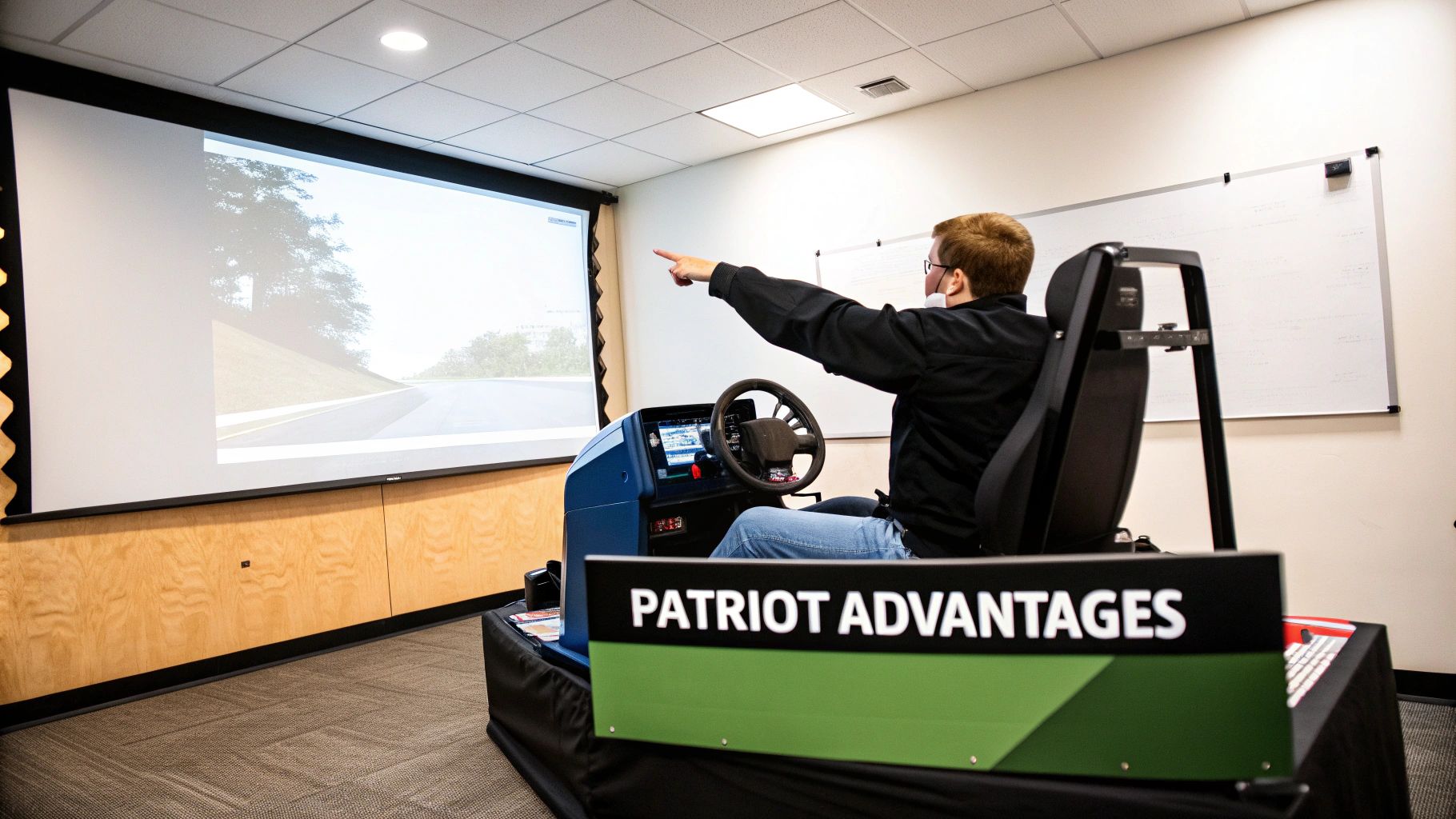
At Patriot CDL, refresher courses feel less like lectures and more like hands-on workshops on your career. We limit groups so instructors spend real time with each driver, drilling down on the skills you need most.
Our custom assessments start every session by pinpointing what’s rusty—from pre-trip inspections to complex backing maneuvers. Then we build exercises around those gaps.
- 4:1 Instructor Ratio ensures one-on-one coaching and rapid feedback.
- Real-Time Evaluations track each drill, so you know exactly where you’ve improved.
- Adaptive Skill Plans shift on the fly, focusing on emerging needs and making every minute count.
Expert Feedback On Skill Recovery
We pair live training with high-fidelity simulators that mirror rain-soaked highways or tight city streets—without the stakes. You’ll tackle snowfall skids or blind-spot checks until they become second nature.
"I returned after years off the road and felt instantly at ease with the simulator drills," says a recent graduate.
Your simulator scores feed directly into your personalized skill report. Instructors use that data to refine upcoming sessions and ensure you’re headed in the right direction.
Patriot CDL also maintains strong hiring links with carriers across the country. In fact, 82% of our trainees land interviews within two weeks of finishing the course.
- Fleet Connections introduce you to national and regional carriers on the lookout for qualified drivers.
- Interview Workshops help you highlight improved metrics and certifications.
- Resume Strengthening emphasizes upgraded inspection and backing scores.
Real Driver Success Stories
Take Mike, a 52-year-old professional who hadn’t driven a big rig in over three years. One week of pinpointed yard drills later, he passed his road test and signed with a regional carrier at a premium rate. His success proves how targeted practice turns directly into career opportunities.
Program Features That Speed Learning
Patriot’s curriculum breaks down every skill into bite-size segments—much like a musician mastering scales before tackling a concerto. You only move forward after hitting 90% accuracy, so there are no gaps in your muscle memory or knowledge.
- Segmented Modules let you perfect each maneuver before advancing.
- Performance Gates require meeting precise thresholds to unlock next-level drills.
- Progress Reports give clear, weekly snapshots of your growth.
This step-by-step approach mirrors flight training, where pilots master rudder control long before landing in crosswinds. By layering drills, you build confidence mile by mile instead of confronting every challenge at once.
We also weave the latest federal and state regulations into practical exercises. That means you finish with up-to-date hours-of-service rules, ELD compliance know-how, and refreshed endorsements ready for testing.
- Updated Rule Reviews for HOS and ELD compliance to help you avoid fines.
- Endorsement Refresher modules for hazmat, tanker, and double/triple trailers.
Ready to secure your spot and transform your driving skills? Visit our Patriot CDL sign-up page to enroll today.
Why Patriot CDL Works
Our modern fleet and dedicated mentors create an environment built for rapid improvement. With late-model trucks and daily debriefs, you refine techniques on the spot.
- Modern Fleet equipped with electronic braking systems and advanced safety features.
- Continuous Coaching ensures feedback at every turn.
- Lifetime Network connects you with mentors and future employers long after training ends.
Combining targeted drills, expert feedback, and strong carrier partnerships, Patriot CDL’s refresher course turns motivated drivers into in-demand professionals.
Frequently Asked Questions
If you’re a seasoned driver curious about what a Class A CDL refresher course delivers, you’ve come to the right place. Think of it as a targeted tune-up for your driving instincts—brushing up on both regs and hands-on maneuvers. By the end, you’ll hit the road with sharper skills and rock-solid confidence.
- Duration: Most programs run 8–192 hours, whether you need a quick brush-up or a full overhaul.
- Curriculum: You’ll drill pre-trip inspections, backing maneuvers, shifting techniques, air-brake systems, and endorsement reviews.
- Cost: Expect $500–$5,000 depending on course length, location, and added resources.
- Formats: Options include in-person classes, high-fidelity simulators, or a blended mix of both.
Key Questions
What exactly does this refresher cover? You’ll revisit every critical element—from pre-trip walkthroughs to backing exercises, manual transmission control, air-brake theory, and endorsement updates. Each module is designed to lock in muscle memory and keep you compliant with the latest hours-of-service rules.
How long will it take? If you’re short on time, an 8-hour intensive might do the trick. Prefer a deeper dive? Comprehensive tracks can stretch out to 192 hours, spread over several days or weeks.
Budget And Preparation
How should I budget for training? Start with tuition, then build in travel, lodging, and meal costs so nothing blindsides you. A simple spreadsheet can help you forecast expenses and stay on track.
What paperwork and gear do I need? Gather your valid Class A CDL, DOT medical card, logbook or ELD credentials, and pack essentials like safety gloves and a flashlight. Don’t forget a notebook for jotting down any rule changes.
- Confirm valid Class A CDL and medical card
- Review hours-of-service regulations in advance
- Pack inspection tools, gloves, and a flashlight
- Arrive well-rested and ready to learn
A clear checklist and proper gear set the stage for productive training.
Ready to sharpen your skills and secure your next haul? Enroll now with Patriot CDL and drive away with renewed confidence.